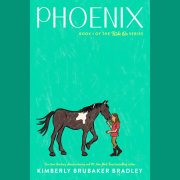
Phoenix

Part of Ride On

A fresh, unexpected horse-kid series from an unexpected horse-kid herself, Kimberly Brubaker Bradley, award-winning and #1 New York Times-bestselling author of The War That Saved My Life and Fighting Words

Harper’s life has just exploded. Her parents are getting a divorce. And she suspects her best friend, Cat, may have known the reason for it long before she did. Now Harper and her mom are starting over in a cramped house, in a new town, where everything feels unfamiliar, including the riding barn next door. Harper’s never been around horses before. And no, she does not want to learn to ride. Then with no warning, a truck dumps a starved and neglected horse right in Harper's yard. She has no idea what to do with a live horse let alone a nearly dead one. But one look at the horse’s huge eyes and his skinny body, and something inside Harper unlocks. The horse is named Phoenix, she decides. And she will not give up on him. Neither, it turns out, will Phoenix give up on her. She doesn’t know it yet, but this is Harper’s first step—toward new friends, new challenges, new adventures. Toward riding.
© Amy McMurray
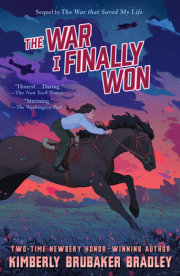
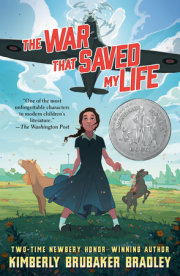
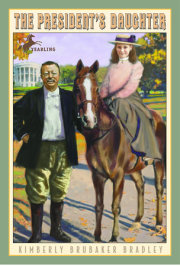
Kimberly Brubaker Bradley is the two-time Newbery Honor winning and #1 New York Times bestselling author of several acclaimed middle grade novels, including Fighting Words, The War That Saved My Life, The War I Finally Won, and Jefferson’s Sons. She and her husband have two grown children and live with their dog, several ponies, a highly opinionated mare, and a surplus of cats on a fifty-two acre farm in Bris­tol, Tennessee. Visit her at kimberlybrubakerbradley.com. View titles by Kimberly Brubaker Bradley
One
Harper managed to keep it together until she saw the dead chickens. Dead chickens. At least half a dozen of them, hung from their feet on a clothesline, pegged out with clothespins of all things, behind an otherwise normal- looking brick farmhouse on the corner of the road. Why the chickens were the end of it for her, Harper didn’t know, but they were. She burst into sobs. Loud, ragged, heartbroken sobs.
It was not the first time she’d cried, but it felt like the first time, all over again.
Her mother saw the chickens too. Her pale face drained of what little color it had. She pulled their car and the little U-Haul trailer they were towing to the side of the road. Put the car in park. Wrapped her arms around Harper, rocked her back and forth. “I’m sorry, I’m sorry, I’m sorry,” she said.
Harper tried to stop crying. “It’s not your fault.”
“It’s my fault we came here,” her mother said. “Maybe we should have stayed in Knoxville.”
“No,” Harper said. She wiped her nose on the sleeve of her T-shirt. “No.” Though she’d never seen dead chickens in a yard in Knoxville.
Her mom took a deep breath. “I’m sure there’s a reason they’re on a clothesline. This is farm country, you know? Though technically we’re still inside the Sommer Springs city limits.”
Harper glanced out the side window at the chicken house. Other than the dead birds, it looked pretty normal. Flowers in a bed near the door, rockers on the porch, a chicken coop in the backyardwith plenty of squawking chickens still inside it. Harper felt sorry for them. Welcome to Sommer Springs, Tennessee, she thought, where chickens watch their friends die and wonder if they’re next!Her stomach flopped sideways.
They’d already driven through what passed as Sommer Springs’s downtown. It had been exactly six blocks long, without a highway or shopping center or Starbucks in sight. Knoxville, where they’d come from, was a real city, a normal city where they’d lived in a normal subdivision among people who didn’t hang butchered birds in their yard for all the world to see.
Harper’s best friend, Cat, who had lived across the street from them in Knoxville, wouldn’t have cried over the dead chickens. She’d have made a joke, about chickens trapped in a chicken horror movie maybe, and probably it would have been funny, and Harper might even have laughed.
Harper and her mom had not only moved away from Knoxville. They had also, specifically, moved away from Cat—from Cat, Cat’s house, and especially Cat’s mom. And Harper’s dad. Nothing about Harper’s life felt normal now. She wondered if it ever would again.
“This house we’re going to istemporary,” her mother said, for maybe the fiftieth time.Once all the papers are signed and the dust has cleared, we’ll buy a place, in a neighborhood like before. I had to find somewhere to rent that would let us bring Harvey.”
In the back seat of their Hyundai, their dog, Harvey, heard his name. He lifted his head and thumped his tail. Harvey was a Great Pyrenees; he weighed more than Harper did.
They couldn’t have left Harvey behind. Harper swallowed and wiped her eyes again. “It’s fine,” she said. “I’m sorry.”
“Don’t be sorry,” said her mom. She took a deep breath. “It’s hard right now. We’ll get through it.”
It would be hard forever. It would never not be hard.
Three and a half weeks ago, in late August, on a Wednesday, Harper’s mom had gotten sick with a stomach bug and gone home from her job as a hospital nurse at lunchtime. She’d found Harper’s dad’s car, which should have been at work along with Harper’s dad, in the driveway of the house across the street. Cat’s house. Curious, Harper’s mom had walked across the street and rung the doorbell and what she’d found—the reason Harper’s dad was there—had been like a bomb. It blew their family to pieces.
All that was something Harper learned later. When she got home from school that day, her parents were both home, in their bedroom, talking in angry voices behind a firmly shut door. When they opened it, they told Harper they both loved her and nothing was her fault, and the details were all between grown-ups and they would handle it. And also, they were getting a divorce.
That last part had been like a bucket of ice water dumped over her head. She gasped, and then she cried, and then she couldn’t stop crying even though both her parents consoled her.
No one wants their parents to divorce.
Only Cat would understand how awful Harper felt. Cat never even saw her own dad. “I’m going over to Cat’s,” Harper’d said when she was finally finished crying.
Her parents exchanged looks she didn’t understand. “Honey,” her mom said, “I’m not sure—no. I want you to stay home tonight.”
“Can I call her?” Harper didn’t have her own cell phone.
“No. Not right now.”
Harper didn’t understand, but she did as she was told. The next morning, still not having spoken to Cat, still not knowing what had actually happened with her parents, she waited anxiously next to Cat’s locker at school. She didn’t know how she’d manage to say the words my parents are divorcing, but she knew Cat would say back something comforting. Something soothing. Something brave. Something like “Well, it’s better than death and dismemberment,” which was usually how Cat greeted bad news.
Harper shuddered as a group of enormous eighth graders, including Cat’s cousin Eli, sauntered down the hall. Eli nodded to her, like he usually would, but then his expression went stiff and he quickly looked away. Had he seen something on Harper’s face? Were her emotions that obvious? Middle school was much more complicated than elementary school. How was she supposed to cope with heartbreak surrounded by so many swaggering strangers?
Finally, Cat appeared at the end of the hall. Harper waved and tried to smile. Cat saw her, and froze. Her face flared bright red and flooded with an expression that Harper recognized with a shock. It was Cat’s guilty look—the one she wore when her mom discovered that she and Harper had dared each other to run through their neighborhood in the middle of the night. The one she wore when she’d said something rude about one of their teachers, and it turned out the teacher had been standing right behind her and heard everything.
The one Cat wore whenever she’d done something wrong.
Ten feet away from Harper, Cat swallowed hard, turned, and scuttled away.
Cat!Harper tried to say, but she couldn’t get the word past the lump in her throat.
What had happened? Did Cat know something? Why wouldn’t anyone tell her?
It wasn’t until she was standing in line for lunch that she found out, and then it was in the worst possible way. Gossip. Someone behind her, someone she didn’t even recognize, said, “That girl over there, in the blue shirt—did you hear what her dad did? With that other girl’s mom—yeah, her best friend—
The person kept talking. Harper knew exactly what her father had done then. And she knew thateveryone knew.
Harper actually went dizzy for a second. The cafeteria walls blurred. She ran to the school bathroom and was sick, and then she sat in the school office and tried not to cry.
When her mother arrived, she said, “I’m so sorry, honey. You must have caught my stomach bug, on top of everything else.”
Harper considered telling her mother the truth. I know exactly what Dad did. With Cat’s mom. But there was no way, absolutely no way, she could say those words out loud.
The next morning, she was hungry enough that she couldn’t pretend she had a stomach bug anymore. Instead she looked at her mom and said, “I can’t go back to that school. Not ever.”
To her surprise, her mother nodded. “You really feel that way?”
“Absolutely,” Harper said. At that moment she absolutely did.
“Me too,” her mom said. “Let’s get out of here. Let’s change everything.”
So. Harper’s mom didn’t mess around. Three weeks later: New job, new school, new home. New town, new life. They were starting over. They’d left everything in their old life behind.
Including Cat, Harper’s dad, and whoever Harper had been.
Harper hadn’t really thought through the consequences of blowing up her entire life. Right now it meant she was stuck in a strange middle place. She wasn’t who she’d been a month ago—Cat’s best friend, the daughter of two nice parents who seemed to mostly get along—and she had no idea what would happen next. Whatever it was, she hadn’t planned on dead chickens.
Someone around Harper’s age came out the side door of the chicken house and walked casually toward the chickens on the line, as though they were used to dead chickens, which Harper had to suppose they were. She dropped her gaze to her lap, not wanting to stare.
Her mom put the car back in gear. “We are not going to be living as far out in the sticks as you might think from whatever that was back there,” she said as they pulled away.
“It was chickens,” Harper said.
“Right,” her mom said. “I eat chicken. So do you.”
“Not from a clothesline!”
“Let’s just not think about it,” her mom said. “We’re almost there. It’s so cute—like a tiny house! You know, like on TV.”
Her mom’s fake enthusiasm was getting old.
“And furnished!”
Yep. Lucky, weren’t they? That when they abandoned their entire lives, they didn’t need to worry about furniture.
They turned a corner, then another. “Here we—”
Harper’s mom stopped talking. Harper saw her face take on a shocked expression, her mouth a perfect O of surprise. Please don’t let it be more chickens, please don’t let it be more chickens, Harper thought before she looked.
It was a horse.

Two
The horse was alive, which was good, because a dead horse would be infinitely worse than dead chickens. It was spotted, reddish and white. It stood on the lawn of what was just about the smallest house Harper had ever seen and was eating the grass with enormous enthusiasm.
Harper’d never been this close to a horse before. She eased the car door open and stared at it.
It was beautiful. Its eyes were brown and soft and welcoming. It flicked its ears toward Harper and Harper swore it smiled.Hey, the horse seemed to say, there you are. It looked happy to see her.
Harper’s mom had told her their new house adjoined a horse stable. The house was technically part of the stable—they were renting it from the stable’s owner. Harper hadn’t spent one moment considering what that meant, until now. She stood and began walking toward the horse.
The horse lifted its head. It quit chewing. Its expression grew slightly alarmed. Harper froze. She dropped her outstretched hands. The horse sighed and bent to graze again. Harper took a slight step toward it. The horse watched her but kept eating and didn’t seem as concerned.
“Hey, pretty,” Harper said. “Hey, pretty boy—” She took another step, then another, until she was standing right beside the horse’s shoulder. The horse blew out its breath.
“Sweet boy,” Harper said. The top of its back was taller than she was.
“Harper, honey, don’t get so close,” her mom said. “What if it bites?”
The horse wasn’t going to bite anything but grass. Harper looked it over—big hooves striped white and black, strong legs, a warm, inviting smell. The horse’s mane was all sorts of colors—red, black, and white hairs intermixed all the way down.
Harper put her hand flat against the horse’s side. Its skin quivered for a moment, then stilled. The horse kept grazing.
A voice nearby said, “Good, you’ve got her. Are you wearing a belt?”
Harper looked up. A four-board fence ran behind the house, and a brown-skinned little girl with her hair in multiple braids had climbed the bottom two boards and was staring at them over the top.
Harper had a belt on with her blue jeans. “Yes?” she said.
“Good,” said the girl. “Take it off and wrap it around her neck, okay? Keep it loose. Then just hang on to her until Dante can get there.”
“Okay,” Harper said slowly. “It’s a girl horse?” She pulled her belt free from the loops of her jeans and slid it around the horse’s neck.
The little girl watched her. “The horse’s name is Katara,” she said. “Dante and I will be right back.” She jumped off the fence and ran down the slope toward the barn, yelling, “Dante! She did it again!”
Harper’s mom walked toward the horse’s head. “I don’t think—”
“Mom, stop moving, you’re scaring her,” Harper said. The horse—Katara—had tensed. “Just let her eat. We don’t want her running—”
“Oh, hello—Beth, right?” a new voice said to Harper’s mother. “We didn’t mean for Katara to be your welcoming committee.” Harper turned to see a tall, broad-shouldered Black woman now climbing over the fence. She wore black leather boots—riding boots, Harper guessed—and what were probably riding pants.
“She’s a lovely horse,” Harper’s mom said.
The woman extended her hand. “I’m Chelsea.”
“Beth. Nice to meet you in person. And this is my daughter, Harper.”
They shook hands, and the woman smiled at Harper. “I’ve got your keys right here,” she said. “Where is that boy?” She turned toward the barn and cupped her hands around her mouth. “Dante!” she shouted.
“Coming!” Now there was a boy climbing the back fence. Clearly the fence didn’t keep anyone out. Dante was older than the girl had been. Harper thought he was probably a little older than her too. He had light brown skin and dark eyes, and straight black hair that flopped low across his forehead. He wore torn jeans over muddy cowboy boots and a white T-shirt streaked with green and brown.
He carried a small bucket that he shook once he landed on the ground. Whatever was inside the bucket rattled. Katara picked her head up and walked toward him, looking pleased. Harper, still hanging on to the ends of her belt, walked with her.
Dante looked at Harper. “Hold the bucket for me?” he said. “Please.”
Harper took the bucket. The horse shoved her nose into it and slurped up whatever it contained. Dante slid a halter over Katara’s nose and handed Harper’s belt back to her.
“Dante,” Chelsea said, “how is it she wasn’t even wearing her halter?”
“I was grooming her, but I had to go to the bathroom. I guess I left the stall unlatched. I’m sorry, Miss Chelsea. I am.”
“How many times now?”
“I’ll be more careful. I promise.”
“You do that.” Miss Chelsea was smiling but sounded stern. Harper got the feeling that she didn’t mess around.
Dante buckled the halter around Katara’s head, clipped a rope to the bottom of it, took the empty bucket from Harper, and started to walk Katara down the hill along the side of the road. Harper and Miss Chelsea watched them go.
“Sometimes I think I ought to put a gate in the paddock fence here,” Miss Chelsea said, turning back to Harper’s mom. “But it’d be just one more thing for some child to leave open. Katara loves to explore. Found her up by the Lutheran church on the corner one time. The neighbors are getting used to her, but it’s not good practice.”
She smiled. “Anyway, welcome! Just wanted to give you the keys and see if you needed anything right off. Harper, thanks for your help.” She shook Harper’s hand and patted Harvey, who’d lumbered out of the car and was sniffing the grass where the horse had been. “All good? Good. I’d better get back. Saturday mornings are busy.”
“She owns the farm,” Harper’s mom said as they watched the woman—Miss Chelsea—climb the fence and head back toward the barn. “The riding school, the big house on the other side, and this little one. She and her wife. She’s married to a doctor. How’d you know how to catch that horse?”
Harper shook her head. “I didn’t know. The girl”—she gestured toward the barn—“she told me what to do.”
“But even before that—you weren’t afraid of her, and she wasn’t afraid of you either.”
Harper shrugged. Katara had talked to her, sort of, the way Harvey did, by the way she moved her body and the expressions on her face. “Why would I be afraid?” Harper liked horses better than chickens, which was something she’d never realized before.

Three
Tiny houses on TV were cute and clever, put together like fancy little jewelry boxes, or the old-fashioned desks Harper’d seen in movies, the ones with hundreds of little drawers. Their new place was just really small.
You walked from the front steps straight into the cramped living room, with its single slumping sofa and a TV on the wall. Behind the sofa, a narrow kitchen table with two chairs. Behind the table, a little L-shaped kitchen with a half-size refrigerator beside the back door, and a double-decker washer and dryer stacked inside a closet. Along the left side of the space were three doors: beyond them, two bedrooms and a bathroom. Harper glanced at herself in the bathroom mirror—the fluorescent light made her normally pinkish skin look gray against her freckles, and her eyes looked tired. She walked into a bedroom. It was barely big enough for a double bed, with a chest of drawers wedged into the closet. The other bedroom was the same size.
Harvey sniffed one of the beds, then turned back to Harper, looking glum.
“I understand,” Harper said. She faced her mother. “Harvey’s not a fan.”
“Well, Harvey,” her mom said, “this was our best and mostly only choice. It’ll be fine.” She looked around as though searching for something to praise. “The walls are a nice color. Paint’s fresh. It’s clean and seems well organized. And it’s—”
“Temporary,” Harper finished for her.
She opened the back door to a little covered porch, with two ancient patio chairs and a little table between them. From the porch she could look across Miss Chelsea’s horse farm, down to a ring full of jumps and some fields beyond it, and, farther back, to the soft line of distant mountains. “This is nice,” Harper said.
Her mother came and stood beside her. “It is.”
They’d brought clothes and sheets, some kitchen stuff, and a few of their favorite books and things. Everything else, like the house in Knoxville itself, still had to be fought over as part of the pending divorce. Harper’d wanted to bring her own bedroom furniture, but her dad urged her to leave it behind. “You’ll be visiting a lot,” he said. “You’ll want it to look like home.”
There were so many things wrong with those sentences, Harper hadn’t been able to reply. Now she guessed she was glad they’d brought so little: There wasn’t room for more.
• • •
It didn’t take long to carry all their stuff indoors. They returned the U-Haul trailer and picked up lunch from a drive-through barbeque restaurant, then sat outside, on the tiny back porch, to eat it. The warm autumn air smelled like grass and dying leaves. Below them, where the hill leveled out into a broad flat field with a fenced riding arena in the middle of it, Miss Chelsea was teaching a lesson to a group of riders. Harper picked out Katara by her distinctive coloring right away, and what looked like Dante riding her—she remembered his cowboy boots—and there was a tiny girl on a white pony who was probably the one she’d met earlier. Some other kids too.
Miss Chelsea’s voice carried. “Okay, let’s do some jumping. Who will be my Fearless Leader?”
The tiny girl shot her hand in the air. “Me!” she shouted, in a way that reminded Harper of Cat, though Cat hated horses. “Go ahead, Emma,” Miss Chelsea said. Emma. That was the girl’s name. Harper took another bite of her brisket sandwich and turned her attention away, to Harvey, who was sniffing the fence line with interest.
Their house perched on the top of a small hill; from the back porch they could see most of the horse farm. Harper looked it over closely. Right behind their house was a tiny, mostly dirt field surrounded by a fence. A paddock, Miss Chelsea’d said. On the other side of the paddock was the barn, with several other buildings, red and white and brown, and green fields spreading out in the distance. Not so far out, she could see the roof of a house between the trees. Probably where Miss Chelsea lived.
Back in the arena, the riders had begun by jumping teeny-tiny fences—pairs of poles that made shallow X’s between the uprights. “Crossrails,” Harper heard Miss Chelsea say. Harper figured they had to be the easiest possible kind of jump.
Now Miss Chelsea changed the jump to make it a little higher, with a single pole straight across. “Okay, Night,” she said. “You next.”
The rider on a wide brown horse came toward the first jump at moderate speed. “Get your leg under you,” Miss Chelsea said. “Eyes up. Look over the fence, not at it—”
At the last possible moment, the rider looked down at the jump. The horse did too. It put its feet down close to the jump, then popped over it awkwardly. Harper winced.
“DON’T look down!” Miss Chelsea yelled. “Look up, look up—”
The second fence was better. As was the third. On the fourth, the rider ducked their head again, and the horse stuttered as before.
“Night!” Miss Chelsea said. “Stop a minute. What’s going on?”
The rider—Night?—stopped the horse and had a conversation with Miss Chelsea that Harper couldn’t hear.
Her mom raised an eyebrow. “You’d think it’d be pretty easy to not look down.”
Harper shrugged. “I don’t know. Maybe it’s harder than it seems. Gymnastics was.” Gymnastics was the only sport she’d ever done. She and Cat had taken lessons for a few years. By the time they quit, Cat had gotten her roundoff back handspring, while Harper could barely manage a cartwheel.
Her mom said, “I always thought gymnastics looked hard. Want to try riding lessons? It’d be something new.”
Harper shook her head. “I have enough new going on.”
“I agree,” her mom said, “plus you’ve never been interested in horses.”
That had been true in the past, but now, watching Katara jump the fences with crisp pleasure, ears pricked, Harper wasn’t so sure. But still. Enough new for now. She had to start school on Monday.
Harvey slid himself under the paddock fence at a spot where the ground dipped and sniffed his way around the inside. There wasn’t anything in the paddock besides a metal water trough; Harper didn’t think he could do any harm. A strange-shaped bird flew up from the creek between the fields. Harper watched it and remembered the dead chickens.
“That house on the corner—that wasn’t some weird religious thing, was it?” she said. “Chickens on the clothesline?”
Her mom started to laugh. She set down her sandwich and covered her mouth. “How else—how else—” Every time she started talking, she interrupted herself, laughing again. “How else are you going to dry your dead chickens?”
There was absolutely no reason why that should be as funny as it was. Harper started laughing too. Her mom leaned in until her shoulder was touching Harper’s shoulder, and they just kept laughing. Harper hadn’t laughed like that in a good long time. In three and a half weeks, in fact. It felt good.
Phoenix is a story of hope rising stubbornly above despair. Beautiful, authentic, and so moving, it’s a gripping and heart-expanding read. I read it in one sitting—it is wonderful.
—Carrie Seim, author of Horse Girl and Horse Camp: A Horse Girl Mystery

"Phoenix has all the charm, wit, and fierce intelligence readers have come to expect from Kimberly Brubaker Bradley. She makes bold choices as she both educates and entertains. You don't have to love horses to love this book, but you just might find you do after reading Phoenix."
—Holly Goldberg Sloan, New York Times bestselling author of Counting by 7s and Short

"Bradley deftly weaves humor into even the darkest moments, [and] the barn community
feels authentically diverse and welcoming . . . A potent, heartrending story about surviving
upheaval and discovering that some rescues work both ways." —Kirkus (starred reivew)

"[A] classic-feeling girl-saves-horse story . . . Harper’s relentless belief in Phoenix and herself buoys this optimistic series launch." —Publishers Weekly (starred review)

"Very relatable and thoughtfully written [showing that] learning responsibility and empathy are Harper’s pathway to healing. . . . Ideal for readers looking for short books about strong animal bonds." —Booklist

About

A fresh, unexpected horse-kid series from an unexpected horse-kid herself, Kimberly Brubaker Bradley, award-winning and #1 New York Times-bestselling author of The War That Saved My Life and Fighting Words

Harper’s life has just exploded. Her parents are getting a divorce. And she suspects her best friend, Cat, may have known the reason for it long before she did. Now Harper and her mom are starting over in a cramped house, in a new town, where everything feels unfamiliar, including the riding barn next door. Harper’s never been around horses before. And no, she does not want to learn to ride. Then with no warning, a truck dumps a starved and neglected horse right in Harper's yard. She has no idea what to do with a live horse let alone a nearly dead one. But one look at the horse’s huge eyes and his skinny body, and something inside Harper unlocks. The horse is named Phoenix, she decides. And she will not give up on him. Neither, it turns out, will Phoenix give up on her. She doesn’t know it yet, but this is Harper’s first step—toward new friends, new challenges, new adventures. Toward riding.

Author

© Amy McMurray
Kimberly Brubaker Bradley is the two-time Newbery Honor winning and #1 New York Times bestselling author of several acclaimed middle grade novels, including Fighting Words, The War That Saved My Life, The War I Finally Won, and Jefferson’s Sons. She and her husband have two grown children and live with their dog, several ponies, a highly opinionated mare, and a surplus of cats on a fifty-two acre farm in Bris­tol, Tennessee. Visit her at kimberlybrubakerbradley.com. View titles by Kimberly Brubaker Bradley

Excerpt

One
Harper managed to keep it together until she saw the dead chickens. Dead chickens. At least half a dozen of them, hung from their feet on a clothesline, pegged out with clothespins of all things, behind an otherwise normal- looking brick farmhouse on the corner of the road. Why the chickens were the end of it for her, Harper didn’t know, but they were. She burst into sobs. Loud, ragged, heartbroken sobs.
It was not the first time she’d cried, but it felt like the first time, all over again.
Her mother saw the chickens too. Her pale face drained of what little color it had. She pulled their car and the little U-Haul trailer they were towing to the side of the road. Put the car in park. Wrapped her arms around Harper, rocked her back and forth. “I’m sorry, I’m sorry, I’m sorry,” she said.
Harper tried to stop crying. “It’s not your fault.”
“It’s my fault we came here,” her mother said. “Maybe we should have stayed in Knoxville.”
“No,” Harper said. She wiped her nose on the sleeve of her T-shirt. “No.” Though she’d never seen dead chickens in a yard in Knoxville.
Her mom took a deep breath. “I’m sure there’s a reason they’re on a clothesline. This is farm country, you know? Though technically we’re still inside the Sommer Springs city limits.”
Harper glanced out the side window at the chicken house. Other than the dead birds, it looked pretty normal. Flowers in a bed near the door, rockers on the porch, a chicken coop in the backyardwith plenty of squawking chickens still inside it. Harper felt sorry for them. Welcome to Sommer Springs, Tennessee, she thought, where chickens watch their friends die and wonder if they’re next!Her stomach flopped sideways.
They’d already driven through what passed as Sommer Springs’s downtown. It had been exactly six blocks long, without a highway or shopping center or Starbucks in sight. Knoxville, where they’d come from, was a real city, a normal city where they’d lived in a normal subdivision among people who didn’t hang butchered birds in their yard for all the world to see.
Harper’s best friend, Cat, who had lived across the street from them in Knoxville, wouldn’t have cried over the dead chickens. She’d have made a joke, about chickens trapped in a chicken horror movie maybe, and probably it would have been funny, and Harper might even have laughed.
Harper and her mom had not only moved away from Knoxville. They had also, specifically, moved away from Cat—from Cat, Cat’s house, and especially Cat’s mom. And Harper’s dad. Nothing about Harper’s life felt normal now. She wondered if it ever would again.
“This house we’re going to istemporary,” her mother said, for maybe the fiftieth time.Once all the papers are signed and the dust has cleared, we’ll buy a place, in a neighborhood like before. I had to find somewhere to rent that would let us bring Harvey.”
In the back seat of their Hyundai, their dog, Harvey, heard his name. He lifted his head and thumped his tail. Harvey was a Great Pyrenees; he weighed more than Harper did.
They couldn’t have left Harvey behind. Harper swallowed and wiped her eyes again. “It’s fine,” she said. “I’m sorry.”
“Don’t be sorry,” said her mom. She took a deep breath. “It’s hard right now. We’ll get through it.”
It would be hard forever. It would never not be hard.
Three and a half weeks ago, in late August, on a Wednesday, Harper’s mom had gotten sick with a stomach bug and gone home from her job as a hospital nurse at lunchtime. She’d found Harper’s dad’s car, which should have been at work along with Harper’s dad, in the driveway of the house across the street. Cat’s house. Curious, Harper’s mom had walked across the street and rung the doorbell and what she’d found—the reason Harper’s dad was there—had been like a bomb. It blew their family to pieces.
All that was something Harper learned later. When she got home from school that day, her parents were both home, in their bedroom, talking in angry voices behind a firmly shut door. When they opened it, they told Harper they both loved her and nothing was her fault, and the details were all between grown-ups and they would handle it. And also, they were getting a divorce.
That last part had been like a bucket of ice water dumped over her head. She gasped, and then she cried, and then she couldn’t stop crying even though both her parents consoled her.
No one wants their parents to divorce.
Only Cat would understand how awful Harper felt. Cat never even saw her own dad. “I’m going over to Cat’s,” Harper’d said when she was finally finished crying.
Her parents exchanged looks she didn’t understand. “Honey,” her mom said, “I’m not sure—no. I want you to stay home tonight.”
“Can I call her?” Harper didn’t have her own cell phone.
“No. Not right now.”
Harper didn’t understand, but she did as she was told. The next morning, still not having spoken to Cat, still not knowing what had actually happened with her parents, she waited anxiously next to Cat’s locker at school. She didn’t know how she’d manage to say the words my parents are divorcing, but she knew Cat would say back something comforting. Something soothing. Something brave. Something like “Well, it’s better than death and dismemberment,” which was usually how Cat greeted bad news.
Harper shuddered as a group of enormous eighth graders, including Cat’s cousin Eli, sauntered down the hall. Eli nodded to her, like he usually would, but then his expression went stiff and he quickly looked away. Had he seen something on Harper’s face? Were her emotions that obvious? Middle school was much more complicated than elementary school. How was she supposed to cope with heartbreak surrounded by so many swaggering strangers?
Finally, Cat appeared at the end of the hall. Harper waved and tried to smile. Cat saw her, and froze. Her face flared bright red and flooded with an expression that Harper recognized with a shock. It was Cat’s guilty look—the one she wore when her mom discovered that she and Harper had dared each other to run through their neighborhood in the middle of the night. The one she wore when she’d said something rude about one of their teachers, and it turned out the teacher had been standing right behind her and heard everything.
The one Cat wore whenever she’d done something wrong.
Ten feet away from Harper, Cat swallowed hard, turned, and scuttled away.
Cat!Harper tried to say, but she couldn’t get the word past the lump in her throat.
What had happened? Did Cat know something? Why wouldn’t anyone tell her?
It wasn’t until she was standing in line for lunch that she found out, and then it was in the worst possible way. Gossip. Someone behind her, someone she didn’t even recognize, said, “That girl over there, in the blue shirt—did you hear what her dad did? With that other girl’s mom—yeah, her best friend—
The person kept talking. Harper knew exactly what her father had done then. And she knew thateveryone knew.
Harper actually went dizzy for a second. The cafeteria walls blurred. She ran to the school bathroom and was sick, and then she sat in the school office and tried not to cry.
When her mother arrived, she said, “I’m so sorry, honey. You must have caught my stomach bug, on top of everything else.”
Harper considered telling her mother the truth. I know exactly what Dad did. With Cat’s mom. But there was no way, absolutely no way, she could say those words out loud.
The next morning, she was hungry enough that she couldn’t pretend she had a stomach bug anymore. Instead she looked at her mom and said, “I can’t go back to that school. Not ever.”
To her surprise, her mother nodded. “You really feel that way?”
“Absolutely,” Harper said. At that moment she absolutely did.
“Me too,” her mom said. “Let’s get out of here. Let’s change everything.”
So. Harper’s mom didn’t mess around. Three weeks later: New job, new school, new home. New town, new life. They were starting over. They’d left everything in their old life behind.
Including Cat, Harper’s dad, and whoever Harper had been.
Harper hadn’t really thought through the consequences of blowing up her entire life. Right now it meant she was stuck in a strange middle place. She wasn’t who she’d been a month ago—Cat’s best friend, the daughter of two nice parents who seemed to mostly get along—and she had no idea what would happen next. Whatever it was, she hadn’t planned on dead chickens.
Someone around Harper’s age came out the side door of the chicken house and walked casually toward the chickens on the line, as though they were used to dead chickens, which Harper had to suppose they were. She dropped her gaze to her lap, not wanting to stare.
Her mom put the car back in gear. “We are not going to be living as far out in the sticks as you might think from whatever that was back there,” she said as they pulled away.
“It was chickens,” Harper said.
“Right,” her mom said. “I eat chicken. So do you.”
“Not from a clothesline!”
“Let’s just not think about it,” her mom said. “We’re almost there. It’s so cute—like a tiny house! You know, like on TV.”
Her mom’s fake enthusiasm was getting old.
“And furnished!”
Yep. Lucky, weren’t they? That when they abandoned their entire lives, they didn’t need to worry about furniture.
They turned a corner, then another. “Here we—”
Harper’s mom stopped talking. Harper saw her face take on a shocked expression, her mouth a perfect O of surprise. Please don’t let it be more chickens, please don’t let it be more chickens, Harper thought before she looked.
It was a horse.

Two
The horse was alive, which was good, because a dead horse would be infinitely worse than dead chickens. It was spotted, reddish and white. It stood on the lawn of what was just about the smallest house Harper had ever seen and was eating the grass with enormous enthusiasm.
Harper’d never been this close to a horse before. She eased the car door open and stared at it.
It was beautiful. Its eyes were brown and soft and welcoming. It flicked its ears toward Harper and Harper swore it smiled.Hey, the horse seemed to say, there you are. It looked happy to see her.
Harper’s mom had told her their new house adjoined a horse stable. The house was technically part of the stable—they were renting it from the stable’s owner. Harper hadn’t spent one moment considering what that meant, until now. She stood and began walking toward the horse.
The horse lifted its head. It quit chewing. Its expression grew slightly alarmed. Harper froze. She dropped her outstretched hands. The horse sighed and bent to graze again. Harper took a slight step toward it. The horse watched her but kept eating and didn’t seem as concerned.
“Hey, pretty,” Harper said. “Hey, pretty boy—” She took another step, then another, until she was standing right beside the horse’s shoulder. The horse blew out its breath.
“Sweet boy,” Harper said. The top of its back was taller than she was.
“Harper, honey, don’t get so close,” her mom said. “What if it bites?”
The horse wasn’t going to bite anything but grass. Harper looked it over—big hooves striped white and black, strong legs, a warm, inviting smell. The horse’s mane was all sorts of colors—red, black, and white hairs intermixed all the way down.
Harper put her hand flat against the horse’s side. Its skin quivered for a moment, then stilled. The horse kept grazing.
A voice nearby said, “Good, you’ve got her. Are you wearing a belt?”
Harper looked up. A four-board fence ran behind the house, and a brown-skinned little girl with her hair in multiple braids had climbed the bottom two boards and was staring at them over the top.
Harper had a belt on with her blue jeans. “Yes?” she said.
“Good,” said the girl. “Take it off and wrap it around her neck, okay? Keep it loose. Then just hang on to her until Dante can get there.”
“Okay,” Harper said slowly. “It’s a girl horse?” She pulled her belt free from the loops of her jeans and slid it around the horse’s neck.
The little girl watched her. “The horse’s name is Katara,” she said. “Dante and I will be right back.” She jumped off the fence and ran down the slope toward the barn, yelling, “Dante! She did it again!”
Harper’s mom walked toward the horse’s head. “I don’t think—”
“Mom, stop moving, you’re scaring her,” Harper said. The horse—Katara—had tensed. “Just let her eat. We don’t want her running—”
“Oh, hello—Beth, right?” a new voice said to Harper’s mother. “We didn’t mean for Katara to be your welcoming committee.” Harper turned to see a tall, broad-shouldered Black woman now climbing over the fence. She wore black leather boots—riding boots, Harper guessed—and what were probably riding pants.
“She’s a lovely horse,” Harper’s mom said.
The woman extended her hand. “I’m Chelsea.”
“Beth. Nice to meet you in person. And this is my daughter, Harper.”
They shook hands, and the woman smiled at Harper. “I’ve got your keys right here,” she said. “Where is that boy?” She turned toward the barn and cupped her hands around her mouth. “Dante!” she shouted.
“Coming!” Now there was a boy climbing the back fence. Clearly the fence didn’t keep anyone out. Dante was older than the girl had been. Harper thought he was probably a little older than her too. He had light brown skin and dark eyes, and straight black hair that flopped low across his forehead. He wore torn jeans over muddy cowboy boots and a white T-shirt streaked with green and brown.
He carried a small bucket that he shook once he landed on the ground. Whatever was inside the bucket rattled. Katara picked her head up and walked toward him, looking pleased. Harper, still hanging on to the ends of her belt, walked with her.
Dante looked at Harper. “Hold the bucket for me?” he said. “Please.”
Harper took the bucket. The horse shoved her nose into it and slurped up whatever it contained. Dante slid a halter over Katara’s nose and handed Harper’s belt back to her.
“Dante,” Chelsea said, “how is it she wasn’t even wearing her halter?”
“I was grooming her, but I had to go to the bathroom. I guess I left the stall unlatched. I’m sorry, Miss Chelsea. I am.”
“How many times now?”
“I’ll be more careful. I promise.”
“You do that.” Miss Chelsea was smiling but sounded stern. Harper got the feeling that she didn’t mess around.
Dante buckled the halter around Katara’s head, clipped a rope to the bottom of it, took the empty bucket from Harper, and started to walk Katara down the hill along the side of the road. Harper and Miss Chelsea watched them go.
“Sometimes I think I ought to put a gate in the paddock fence here,” Miss Chelsea said, turning back to Harper’s mom. “But it’d be just one more thing for some child to leave open. Katara loves to explore. Found her up by the Lutheran church on the corner one time. The neighbors are getting used to her, but it’s not good practice.”
She smiled. “Anyway, welcome! Just wanted to give you the keys and see if you needed anything right off. Harper, thanks for your help.” She shook Harper’s hand and patted Harvey, who’d lumbered out of the car and was sniffing the grass where the horse had been. “All good? Good. I’d better get back. Saturday mornings are busy.”
“She owns the farm,” Harper’s mom said as they watched the woman—Miss Chelsea—climb the fence and head back toward the barn. “The riding school, the big house on the other side, and this little one. She and her wife. She’s married to a doctor. How’d you know how to catch that horse?”
Harper shook her head. “I didn’t know. The girl”—she gestured toward the barn—“she told me what to do.”
“But even before that—you weren’t afraid of her, and she wasn’t afraid of you either.”
Harper shrugged. Katara had talked to her, sort of, the way Harvey did, by the way she moved her body and the expressions on her face. “Why would I be afraid?” Harper liked horses better than chickens, which was something she’d never realized before.

Three
Tiny houses on TV were cute and clever, put together like fancy little jewelry boxes, or the old-fashioned desks Harper’d seen in movies, the ones with hundreds of little drawers. Their new place was just really small.
You walked from the front steps straight into the cramped living room, with its single slumping sofa and a TV on the wall. Behind the sofa, a narrow kitchen table with two chairs. Behind the table, a little L-shaped kitchen with a half-size refrigerator beside the back door, and a double-decker washer and dryer stacked inside a closet. Along the left side of the space were three doors: beyond them, two bedrooms and a bathroom. Harper glanced at herself in the bathroom mirror—the fluorescent light made her normally pinkish skin look gray against her freckles, and her eyes looked tired. She walked into a bedroom. It was barely big enough for a double bed, with a chest of drawers wedged into the closet. The other bedroom was the same size.
Harvey sniffed one of the beds, then turned back to Harper, looking glum.
“I understand,” Harper said. She faced her mother. “Harvey’s not a fan.”
“Well, Harvey,” her mom said, “this was our best and mostly only choice. It’ll be fine.” She looked around as though searching for something to praise. “The walls are a nice color. Paint’s fresh. It’s clean and seems well organized. And it’s—”
“Temporary,” Harper finished for her.
She opened the back door to a little covered porch, with two ancient patio chairs and a little table between them. From the porch she could look across Miss Chelsea’s horse farm, down to a ring full of jumps and some fields beyond it, and, farther back, to the soft line of distant mountains. “This is nice,” Harper said.
Her mother came and stood beside her. “It is.”
They’d brought clothes and sheets, some kitchen stuff, and a few of their favorite books and things. Everything else, like the house in Knoxville itself, still had to be fought over as part of the pending divorce. Harper’d wanted to bring her own bedroom furniture, but her dad urged her to leave it behind. “You’ll be visiting a lot,” he said. “You’ll want it to look like home.”
There were so many things wrong with those sentences, Harper hadn’t been able to reply. Now she guessed she was glad they’d brought so little: There wasn’t room for more.
• • •
It didn’t take long to carry all their stuff indoors. They returned the U-Haul trailer and picked up lunch from a drive-through barbeque restaurant, then sat outside, on the tiny back porch, to eat it. The warm autumn air smelled like grass and dying leaves. Below them, where the hill leveled out into a broad flat field with a fenced riding arena in the middle of it, Miss Chelsea was teaching a lesson to a group of riders. Harper picked out Katara by her distinctive coloring right away, and what looked like Dante riding her—she remembered his cowboy boots—and there was a tiny girl on a white pony who was probably the one she’d met earlier. Some other kids too.
Miss Chelsea’s voice carried. “Okay, let’s do some jumping. Who will be my Fearless Leader?”
The tiny girl shot her hand in the air. “Me!” she shouted, in a way that reminded Harper of Cat, though Cat hated horses. “Go ahead, Emma,” Miss Chelsea said. Emma. That was the girl’s name. Harper took another bite of her brisket sandwich and turned her attention away, to Harvey, who was sniffing the fence line with interest.
Their house perched on the top of a small hill; from the back porch they could see most of the horse farm. Harper looked it over closely. Right behind their house was a tiny, mostly dirt field surrounded by a fence. A paddock, Miss Chelsea’d said. On the other side of the paddock was the barn, with several other buildings, red and white and brown, and green fields spreading out in the distance. Not so far out, she could see the roof of a house between the trees. Probably where Miss Chelsea lived.
Back in the arena, the riders had begun by jumping teeny-tiny fences—pairs of poles that made shallow X’s between the uprights. “Crossrails,” Harper heard Miss Chelsea say. Harper figured they had to be the easiest possible kind of jump.
Now Miss Chelsea changed the jump to make it a little higher, with a single pole straight across. “Okay, Night,” she said. “You next.”
The rider on a wide brown horse came toward the first jump at moderate speed. “Get your leg under you,” Miss Chelsea said. “Eyes up. Look over the fence, not at it—”
At the last possible moment, the rider looked down at the jump. The horse did too. It put its feet down close to the jump, then popped over it awkwardly. Harper winced.
“DON’T look down!” Miss Chelsea yelled. “Look up, look up—”
The second fence was better. As was the third. On the fourth, the rider ducked their head again, and the horse stuttered as before.
“Night!” Miss Chelsea said. “Stop a minute. What’s going on?”
The rider—Night?—stopped the horse and had a conversation with Miss Chelsea that Harper couldn’t hear.
Her mom raised an eyebrow. “You’d think it’d be pretty easy to not look down.”
Harper shrugged. “I don’t know. Maybe it’s harder than it seems. Gymnastics was.” Gymnastics was the only sport she’d ever done. She and Cat had taken lessons for a few years. By the time they quit, Cat had gotten her roundoff back handspring, while Harper could barely manage a cartwheel.
Her mom said, “I always thought gymnastics looked hard. Want to try riding lessons? It’d be something new.”
Harper shook her head. “I have enough new going on.”
“I agree,” her mom said, “plus you’ve never been interested in horses.”
That had been true in the past, but now, watching Katara jump the fences with crisp pleasure, ears pricked, Harper wasn’t so sure. But still. Enough new for now. She had to start school on Monday.
Harvey slid himself under the paddock fence at a spot where the ground dipped and sniffed his way around the inside. There wasn’t anything in the paddock besides a metal water trough; Harper didn’t think he could do any harm. A strange-shaped bird flew up from the creek between the fields. Harper watched it and remembered the dead chickens.
“That house on the corner—that wasn’t some weird religious thing, was it?” she said. “Chickens on the clothesline?”
Her mom started to laugh. She set down her sandwich and covered her mouth. “How else—how else—” Every time she started talking, she interrupted herself, laughing again. “How else are you going to dry your dead chickens?”
There was absolutely no reason why that should be as funny as it was. Harper started laughing too. Her mom leaned in until her shoulder was touching Harper’s shoulder, and they just kept laughing. Harper hadn’t laughed like that in a good long time. In three and a half weeks, in fact. It felt good.

Praise

Phoenix is a story of hope rising stubbornly above despair. Beautiful, authentic, and so moving, it’s a gripping and heart-expanding read. I read it in one sitting—it is wonderful.
—Carrie Seim, author of Horse Girl and Horse Camp: A Horse Girl Mystery

"Phoenix has all the charm, wit, and fierce intelligence readers have come to expect from Kimberly Brubaker Bradley. She makes bold choices as she both educates and entertains. You don't have to love horses to love this book, but you just might find you do after reading Phoenix."
—Holly Goldberg Sloan, New York Times bestselling author of Counting by 7s and Short

"Bradley deftly weaves humor into even the darkest moments, [and] the barn community
feels authentically diverse and welcoming . . . A potent, heartrending story about surviving
upheaval and discovering that some rescues work both ways." —Kirkus (starred reivew)

"[A] classic-feeling girl-saves-horse story . . . Harper’s relentless belief in Phoenix and herself buoys this optimistic series launch." —Publishers Weekly (starred review)

"Very relatable and thoughtfully written [showing that] learning responsibility and empathy are Harper’s pathway to healing. . . . Ideal for readers looking for short books about strong animal bonds." —Booklist