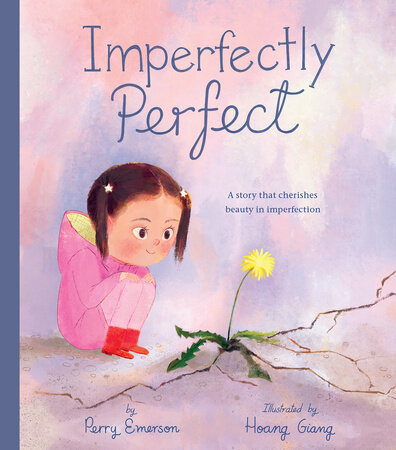
A thought-provoking picture book inspired by the idea that there is beauty to be cherished in imperfection. Introduces the Japanese art of Kintsugi, which involves repairing broken pottery using lacquer and gold to create something stronger and even more beautiful than the original.
When Maria rips her brother Robbie’s favorite book, she’s worried that they might never be friends again. But with encouragement and wise words from family friend Ms. Bea, Maria learns to embrace the beauty of broken things and seize the opportunity they offer for healing and reconciliation. This heartfelt story celebrates the perfect imperfections that surround us in our everyday lives and introduces readers to the Japanese art of Kintsugi, which involves repairing broken pottery with lacquer and gold to create something stronger and even more beautiful than the original.
Perry Emerson lives in London with his partner and their much-too-fluffy cat. He mostly edits picture books, but occasionally dabbles in writing them, too. When he's not thinking about words, he enjoys spending time in the kitchen cooking and, more importantly, eating.
View titles by Perry Emerson
A young girl learns that there’s value in things that aren’t perfect and that even broken things can be repaired.
When Maria reads her older brother Robbie’s favorite book, she turns the pages just like he does, but the results are not at all the same: The pages rip and flutter around her. Angry, Robbie stomps off, and Maria bursts into tears. Ms. Bea, a kindly older caregiver, shows her a bowl that was perfect when Ms. Bea gifted it to Maria’s mother but then broke (the word kintsugi is not used). The pair then take a walk, looking for other things that are imperfectly perfect, such as the dandelion growing in a crack in the broken pavement, the wrinkles on Ms. Bea’s face, and the scar on Maria’s knee, which reminds her of how Robbie lovingly carried her home after she hurt herself while playing. Maria is inspired to fix Robbie’s book with some gold tape, and, after her heartfelt apology, the two snuggle in to read together. While the premise of making the best of imperfection is a good one, Emerson’s writing doesn’t quite carry it off. The dialogue is a bit stilted, and readers may wonder why Maria didn’t stop after the first page ripped. Cartoon illustrations depict a diverse town; Maria and Robbie have light tan skin and dark hair, while Ms. Bea is pale with white hair.
The message is important but the delivery lacks the spark that will keep readers coming back. (Picture book. 4-8)—Kirkus Reviews
A thought-provoking picture book inspired by the idea that there is beauty to be cherished in imperfection. Introduces the Japanese art of Kintsugi, which involves repairing broken pottery using lacquer and gold to create something stronger and even more beautiful than the original.
When Maria rips her brother Robbie’s favorite book, she’s worried that they might never be friends again. But with encouragement and wise words from family friend Ms. Bea, Maria learns to embrace the beauty of broken things and seize the opportunity they offer for healing and reconciliation. This heartfelt story celebrates the perfect imperfections that surround us in our everyday lives and introduces readers to the Japanese art of Kintsugi, which involves repairing broken pottery with lacquer and gold to create something stronger and even more beautiful than the original.
Author
Perry Emerson lives in London with his partner and their much-too-fluffy cat. He mostly edits picture books, but occasionally dabbles in writing them, too. When he's not thinking about words, he enjoys spending time in the kitchen cooking and, more importantly, eating.
View titles by Perry Emerson
A young girl learns that there’s value in things that aren’t perfect and that even broken things can be repaired.
When Maria reads her older brother Robbie’s favorite book, she turns the pages just like he does, but the results are not at all the same: The pages rip and flutter around her. Angry, Robbie stomps off, and Maria bursts into tears. Ms. Bea, a kindly older caregiver, shows her a bowl that was perfect when Ms. Bea gifted it to Maria’s mother but then broke (the word kintsugi is not used). The pair then take a walk, looking for other things that are imperfectly perfect, such as the dandelion growing in a crack in the broken pavement, the wrinkles on Ms. Bea’s face, and the scar on Maria’s knee, which reminds her of how Robbie lovingly carried her home after she hurt herself while playing. Maria is inspired to fix Robbie’s book with some gold tape, and, after her heartfelt apology, the two snuggle in to read together. While the premise of making the best of imperfection is a good one, Emerson’s writing doesn’t quite carry it off. The dialogue is a bit stilted, and readers may wonder why Maria didn’t stop after the first page ripped. Cartoon illustrations depict a diverse town; Maria and Robbie have light tan skin and dark hair, while Ms. Bea is pale with white hair.
The message is important but the delivery lacks the spark that will keep readers coming back. (Picture book. 4-8)—Kirkus Reviews