From the co-creator of the #1 New York Times bestselling Spiderwick Chronicles series comes a deliciously dark supernatural middle-grade coming-of-age story, with two-color illustrations throughout.

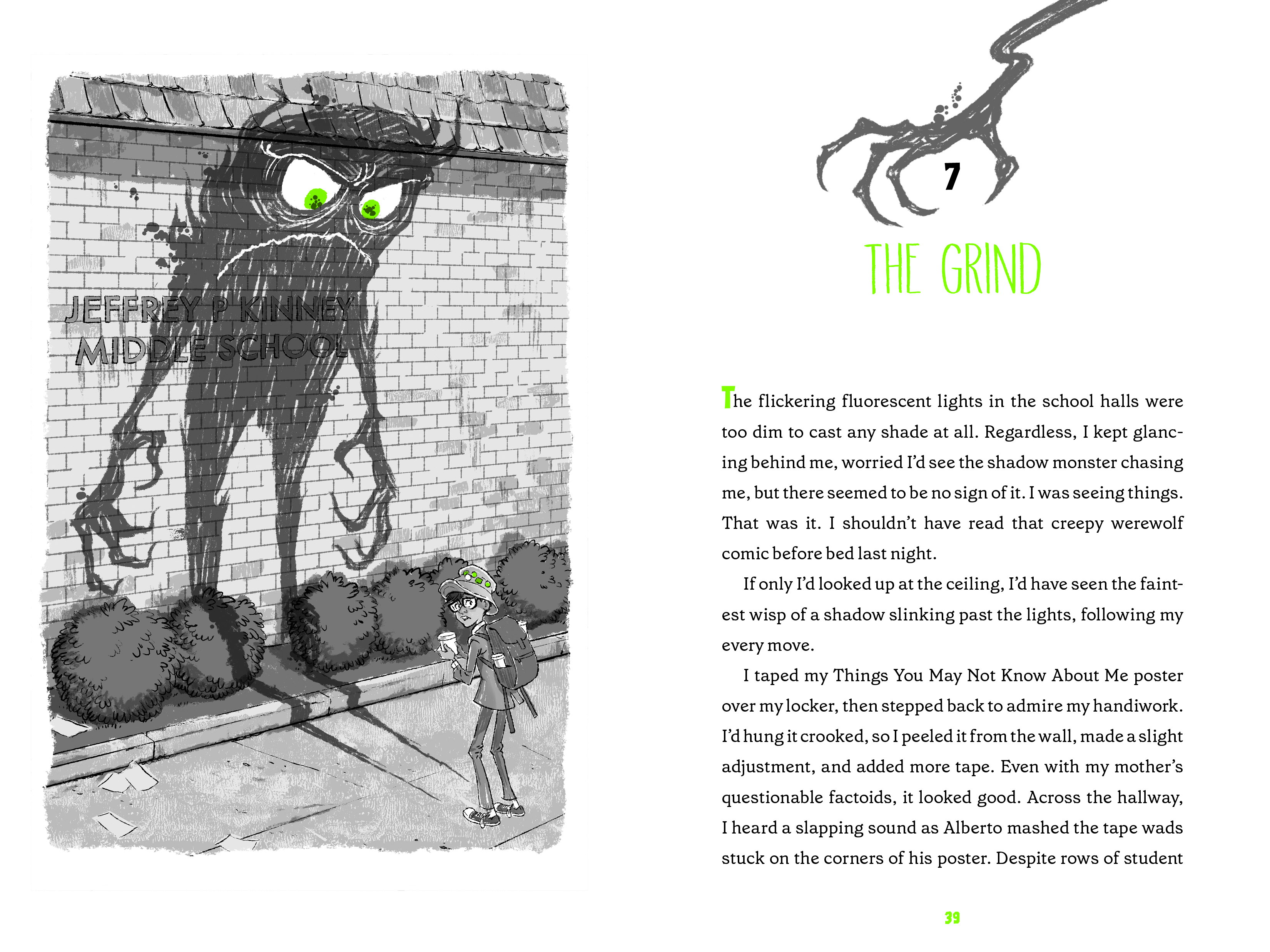
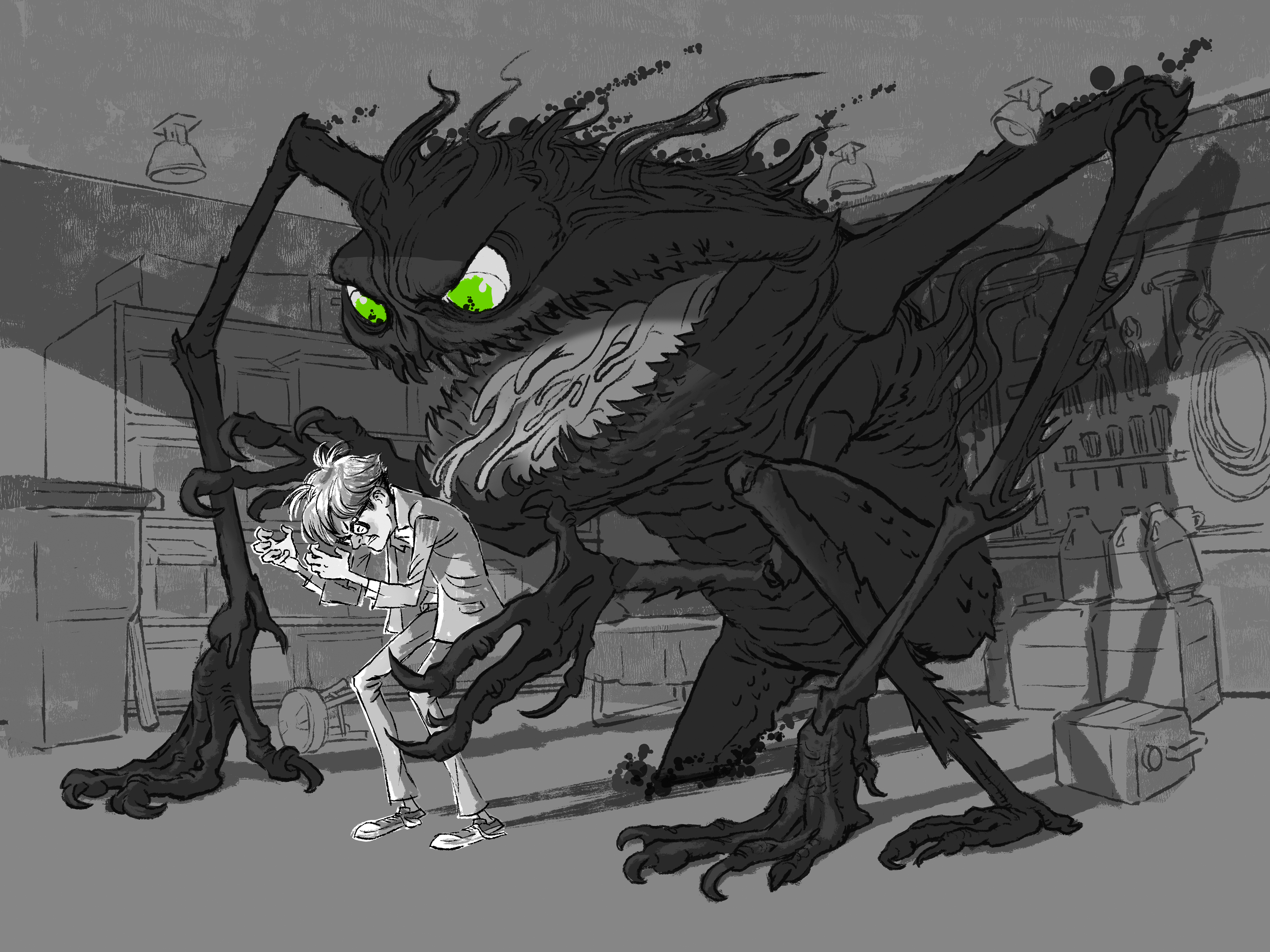
Timothy’s grandpa has a saying: the best way to deal with bullies is to wump ‘em. But Timothy would never hurt a fly—and not just because he genuinely loves bugs. He’s always been a good kid…until a shadowy monster appears and begins feeding on his darkest thoughts. Facing bullies both at home and at school, Timothy cocoons himself in the monster’s shadows, where he is consumed by a desire for revenge. But how much of himself can Timothy give up before he is completely transformed?

Award-winning author-illustrator Tony DiTerlizzi stuns in this creepy, brilliantly illustrated, and poignant reflection of the darkness—and light—inside of all of us.
Tony DiTerlizzi is a New York Times bestselling author who was awarded a Caldecott Honor for his cinematic version of Howitt's classic The Spider and the Fly. His art has graced the work of J. R. R. Tolkien, Anne McCaffrey, and Greg Bear. He and his wife reside with their pug in Amherst, Massachusetts. View titles by Tony DiTerlizzi
Part 1
A Shadow Forms

1
The Cocoon

The transformation was nearly complete. A cocoon, wrapped in delicate dried leaves, wriggled in the mulch. I rubbed my hands in anticipation as unseen claws scratched at the silken liner that held the creature inside. At last, the cocoon ripped open, like a tiny sleeping bag. A fat, fuzzy insect emerged, its wings no more than a wrinkled green wad. On six shaky legs it crawled up a nearby twig.

Wait. I know what you’re thinking: Is this a story about bugs? Because bugs are gross. They scurry around. They bite. They sting. True, but insects are some of the oldest animals on Earth. They are important to the food chain, the pollination of flowers, the creation of textiles, and they’re even a delicacy in certain parts of the world. Look, you either love them or hate them. And I really love them. I even cheer for them.

“Come on, Moonbeam, you can do it!”

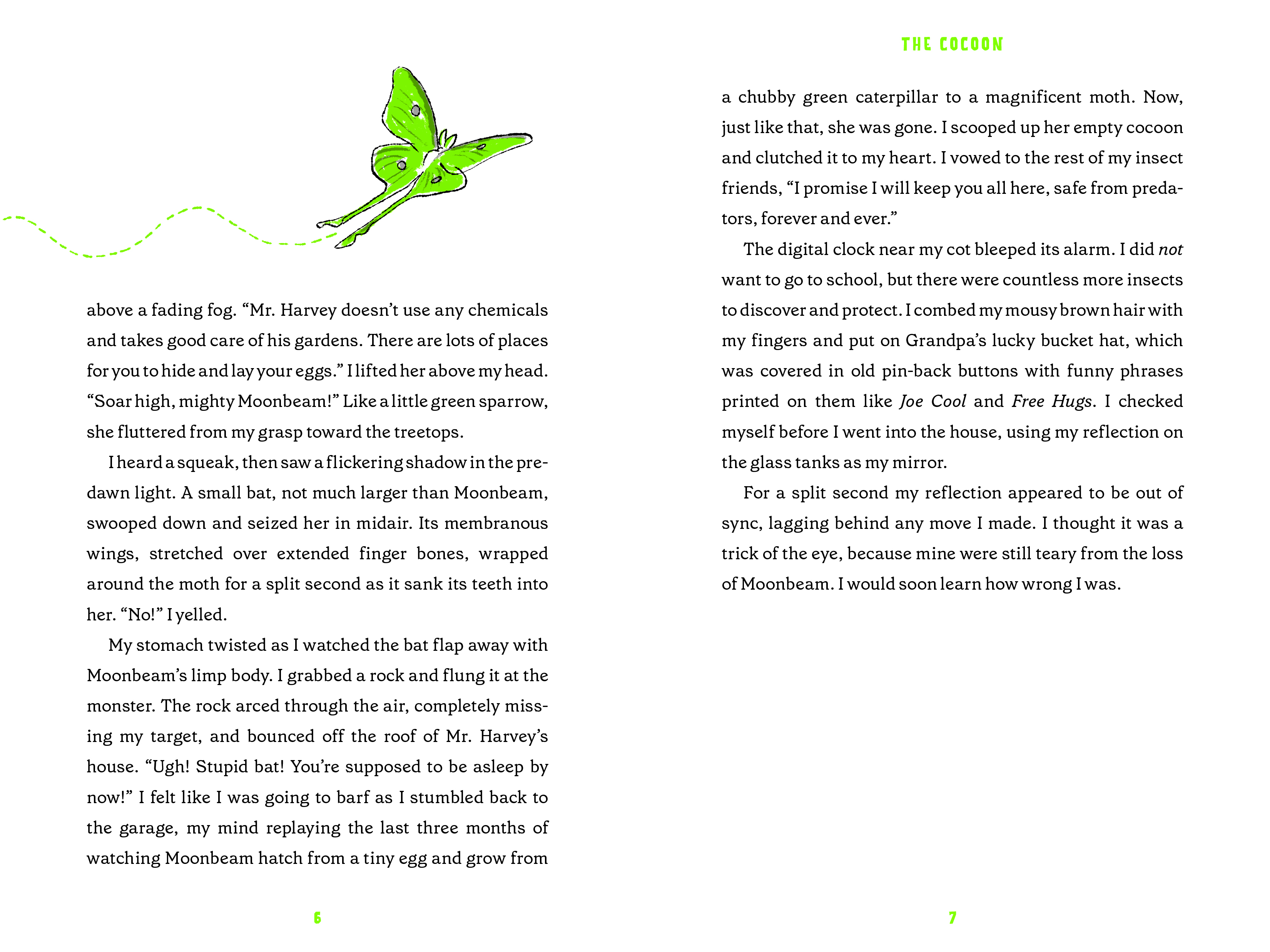
Moonbeam’s downy wings slowly grew and took shape, like a time-lapse video of a blooming flower, becoming larger with each passing minute and revealing a beautiful shade of pale green. As she readied for takeoff, I could see the phases of the moon in the spots on her fluttering wings, which is why her species is commonly known as the luna moth.

I removed the lid of Moonbeam’s glass terrarium and coaxed her onto my fingers. She watched me with beady black eyes and waved her feathery antennae. I sang softly along with the song on the radio, “Believe me when I tell you, I’ll never do you no harm.”

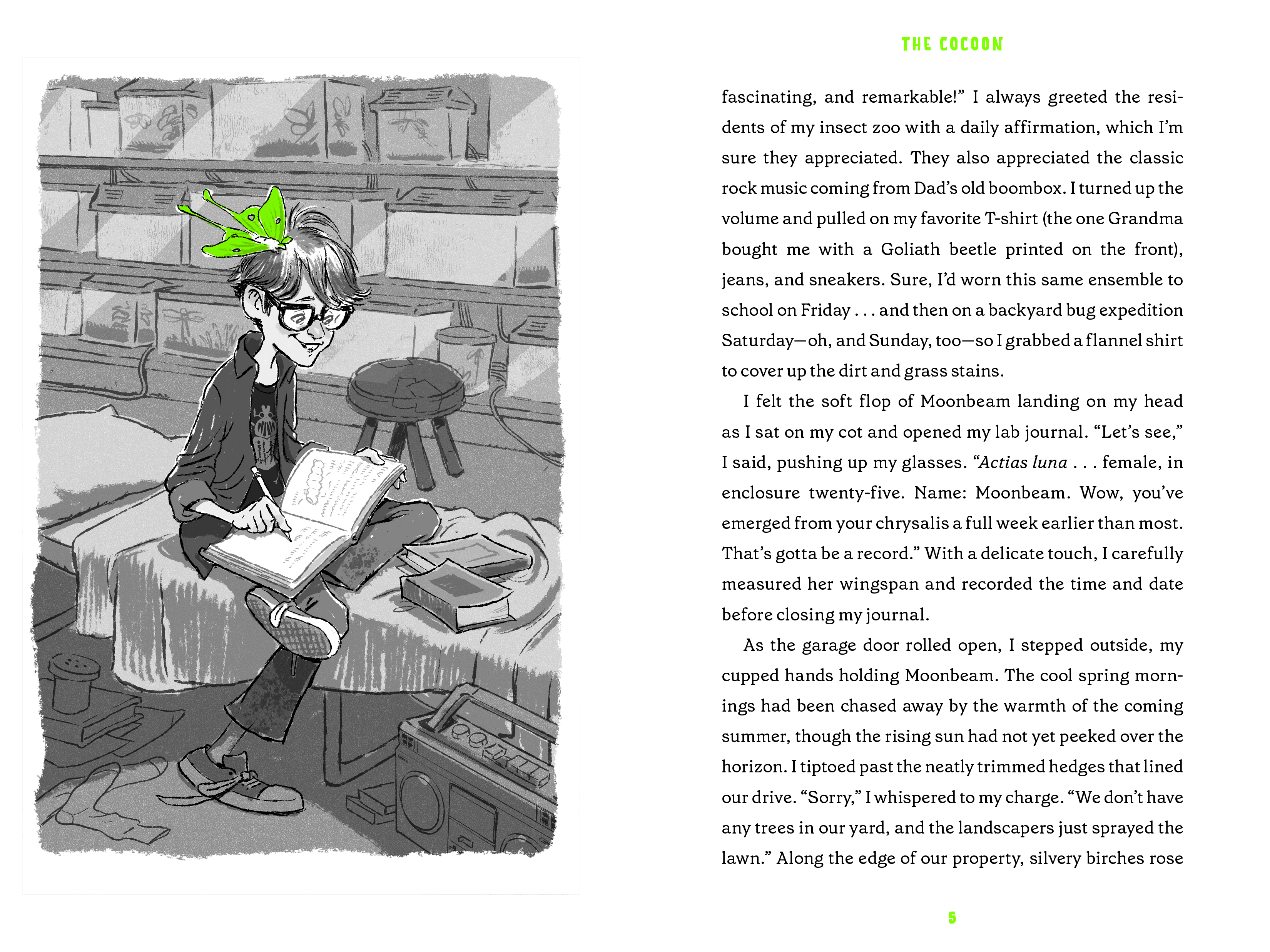
Moonbeam took flight, flittering over my unmade folding cot and pile of dirty laundry, past hanging bicycles, and above my mother’s white Mercedes convertible. Sure, my house might be one of the most spacious and luxurious in all of Shady Heights, but I’m more comfortable living in the garage. It’s my bedroom and my research lab.

I flipped a power switch, which activated a succession of lights revealing dozens of glass tanks, jars, and terrariums arranged on shelves from floor to ceiling. A hum began, from numerous electric pumps, followed by the hiss of numerous water misters. All these sounds harmonized with the chirruping chorus coming from within each tank. A faded canvas banner—that Dad made—hung overhead: nurturing all things small but important.

“Good morning, friends! Each one of you is beautiful, fascinating, and remarkable!” I always greeted the residents of my insect zoo with a daily affirmation, which I’m sure they appreciated. They also appreciated the classic rock music coming from Dad’s old boombox. I turned up the volume and pulled on my favorite T-shirt (the one Grandma bought me with a Goliath beetle printed on the front), jeans, and sneakers. Sure, I’d worn this same ensemble to school on Friday . . . and then on a backyard bug expedition Saturday—oh, and Sunday, too—so I grabbed a flannel shirt to cover up the dirt and grass stains.

I felt the soft flop of Moonbeam landing on my head as I sat on my cot and opened my lab journal. “Let’s see,” I said, pushing up my glasses. “Actias luna . . . female, in enclosure twenty-five. Name: Moonbeam. Wow, you’ve emerged from your chrysalis a full week earlier than most. That’s gotta be a record.” With a delicate touch, I carefully measured her wingspan and recorded the time and date before closing my journal.

As the garage door rolled open, I stepped outside, my cupped hands holding Moonbeam. The cool spring mornings had been chased away by the warmth of the coming summer, though the rising sun had not yet peeked over the horizon. I tiptoed past the neatly trimmed hedges that lined our drive. “Sorry,” I whispered to my charge. “We don’t have any trees in our yard, and the landscapers just sprayed the lawn.” Along the edge of our property, silvery birches rose above a fading fog. “Mr. Harvey doesn’t use any chemicals and takes good care of his gardens. There are lots of places for you to hide and lay your eggs.” I lifted her above my head. “Soar high, mighty Moonbeam!” Like a little green sparrow, she fluttered from my grasp toward the treetops.

I heard a squeak, then saw a flickering shadow in the predawn light. A small bat, not much larger than Moonbeam, swooped down and seized her in midair. Its membranous wings, stretched over extended finger bones, wrapped around the moth for a split second as it sank its teeth into her. “No!” I yelled.

My stomach twisted as I watched the bat flap away with Moonbeam’s limp body. I grabbed a rock and flung it at the monster. The rock arced through the air, completely missing my target, and bounced off the roof of Mr. Harvey’s house. “Ugh! Stupid bat! You’re supposed to be asleep by now!” I felt like I was going to barf as I stumbled back to the garage, my mind replaying the last three months of watching Moonbeam hatch from a tiny egg and grow from a chubby green caterpillar to a magnificent moth. Now, just like that, she was gone. I scooped up her empty cocoon and clutched it to my heart. I vowed to the rest of my insect friends, “I promise I will keep you all here, safe from predators, forever and ever.”

The digital clock near my cot bleeped its alarm. I did not want to go to school, but there were countless more insects to discover and protect. I combed my mousy brown hair with my fingers and put on Grandpa’s lucky bucket hat, which was covered in old pin-back buttons with funny phrases printed on them like Joe Cool and Free Hugs. I checked myself before I went into the house, using my reflection on the glass tanks as my mirror.

For a split second my reflection appeared to be out of sync, lagging behind any move I made. I thought it was a trick of the eye, because mine were still teary from the loss of Moonbeam. I would soon learn how wrong I was.
additional book photo

About

From the co-creator of the #1 New York Times bestselling Spiderwick Chronicles series comes a deliciously dark supernatural middle-grade coming-of-age story, with two-color illustrations throughout.

Timothy’s grandpa has a saying: the best way to deal with bullies is to wump ‘em. But Timothy would never hurt a fly—and not just because he genuinely loves bugs. He’s always been a good kid…until a shadowy monster appears and begins feeding on his darkest thoughts. Facing bullies both at home and at school, Timothy cocoons himself in the monster’s shadows, where he is consumed by a desire for revenge. But how much of himself can Timothy give up before he is completely transformed?

Award-winning author-illustrator Tony DiTerlizzi stuns in this creepy, brilliantly illustrated, and poignant reflection of the darkness—and light—inside of all of us.

Author

Tony DiTerlizzi is a New York Times bestselling author who was awarded a Caldecott Honor for his cinematic version of Howitt's classic The Spider and the Fly. His art has graced the work of J. R. R. Tolkien, Anne McCaffrey, and Greg Bear. He and his wife reside with their pug in Amherst, Massachusetts. View titles by Tony DiTerlizzi

Excerpt

Part 1
A Shadow Forms

1
The Cocoon

The transformation was nearly complete. A cocoon, wrapped in delicate dried leaves, wriggled in the mulch. I rubbed my hands in anticipation as unseen claws scratched at the silken liner that held the creature inside. At last, the cocoon ripped open, like a tiny sleeping bag. A fat, fuzzy insect emerged, its wings no more than a wrinkled green wad. On six shaky legs it crawled up a nearby twig.

Wait. I know what you’re thinking: Is this a story about bugs? Because bugs are gross. They scurry around. They bite. They sting. True, but insects are some of the oldest animals on Earth. They are important to the food chain, the pollination of flowers, the creation of textiles, and they’re even a delicacy in certain parts of the world. Look, you either love them or hate them. And I really love them. I even cheer for them.

“Come on, Moonbeam, you can do it!”

Moonbeam’s downy wings slowly grew and took shape, like a time-lapse video of a blooming flower, becoming larger with each passing minute and revealing a beautiful shade of pale green. As she readied for takeoff, I could see the phases of the moon in the spots on her fluttering wings, which is why her species is commonly known as the luna moth.

I removed the lid of Moonbeam’s glass terrarium and coaxed her onto my fingers. She watched me with beady black eyes and waved her feathery antennae. I sang softly along with the song on the radio, “Believe me when I tell you, I’ll never do you no harm.”

Moonbeam took flight, flittering over my unmade folding cot and pile of dirty laundry, past hanging bicycles, and above my mother’s white Mercedes convertible. Sure, my house might be one of the most spacious and luxurious in all of Shady Heights, but I’m more comfortable living in the garage. It’s my bedroom and my research lab.

I flipped a power switch, which activated a succession of lights revealing dozens of glass tanks, jars, and terrariums arranged on shelves from floor to ceiling. A hum began, from numerous electric pumps, followed by the hiss of numerous water misters. All these sounds harmonized with the chirruping chorus coming from within each tank. A faded canvas banner—that Dad made—hung overhead: nurturing all things small but important.

“Good morning, friends! Each one of you is beautiful, fascinating, and remarkable!” I always greeted the residents of my insect zoo with a daily affirmation, which I’m sure they appreciated. They also appreciated the classic rock music coming from Dad’s old boombox. I turned up the volume and pulled on my favorite T-shirt (the one Grandma bought me with a Goliath beetle printed on the front), jeans, and sneakers. Sure, I’d worn this same ensemble to school on Friday . . . and then on a backyard bug expedition Saturday—oh, and Sunday, too—so I grabbed a flannel shirt to cover up the dirt and grass stains.

I felt the soft flop of Moonbeam landing on my head as I sat on my cot and opened my lab journal. “Let’s see,” I said, pushing up my glasses. “Actias luna . . . female, in enclosure twenty-five. Name: Moonbeam. Wow, you’ve emerged from your chrysalis a full week earlier than most. That’s gotta be a record.” With a delicate touch, I carefully measured her wingspan and recorded the time and date before closing my journal.

As the garage door rolled open, I stepped outside, my cupped hands holding Moonbeam. The cool spring mornings had been chased away by the warmth of the coming summer, though the rising sun had not yet peeked over the horizon. I tiptoed past the neatly trimmed hedges that lined our drive. “Sorry,” I whispered to my charge. “We don’t have any trees in our yard, and the landscapers just sprayed the lawn.” Along the edge of our property, silvery birches rose above a fading fog. “Mr. Harvey doesn’t use any chemicals and takes good care of his gardens. There are lots of places for you to hide and lay your eggs.” I lifted her above my head. “Soar high, mighty Moonbeam!” Like a little green sparrow, she fluttered from my grasp toward the treetops.

I heard a squeak, then saw a flickering shadow in the predawn light. A small bat, not much larger than Moonbeam, swooped down and seized her in midair. Its membranous wings, stretched over extended finger bones, wrapped around the moth for a split second as it sank its teeth into her. “No!” I yelled.

My stomach twisted as I watched the bat flap away with Moonbeam’s limp body. I grabbed a rock and flung it at the monster. The rock arced through the air, completely missing my target, and bounced off the roof of Mr. Harvey’s house. “Ugh! Stupid bat! You’re supposed to be asleep by now!” I felt like I was going to barf as I stumbled back to the garage, my mind replaying the last three months of watching Moonbeam hatch from a tiny egg and grow from a chubby green caterpillar to a magnificent moth. Now, just like that, she was gone. I scooped up her empty cocoon and clutched it to my heart. I vowed to the rest of my insect friends, “I promise I will keep you all here, safe from predators, forever and ever.”

The digital clock near my cot bleeped its alarm. I did not want to go to school, but there were countless more insects to discover and protect. I combed my mousy brown hair with my fingers and put on Grandpa’s lucky bucket hat, which was covered in old pin-back buttons with funny phrases printed on them like Joe Cool and Free Hugs. I checked myself before I went into the house, using my reflection on the glass tanks as my mirror.

For a split second my reflection appeared to be out of sync, lagging behind any move I made. I thought it was a trick of the eye, because mine were still teary from the loss of Moonbeam. I would soon learn how wrong I was.

Photos

additional book photo

Mental Health Awareness Month Resources

May is Mental Health Awareness Month and addressing student wellness and mental health is critical to help children learn how to manage emotions, develop healthy identities, empathize with peers, and pursue individual goals. We created thematic guides and book lists to help foster important conversations to build an inclusive environment where emotions matter. Explore our social emotional

Read more

Books for Asian American, Native Hawaiian, and Pacific Islander Heritage Month

Each May, we honor the stories, histories, and cultures of Asian Americans, Native Hawaiians, and Pacific Islanders. Below is a selection of acclaimed fiction and nonfiction books by AANHPI creators to share with your students this month and throughout the year. AANHPI Creators – Elementary School titles  

Read more