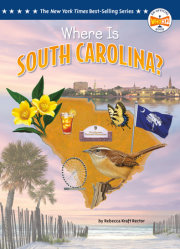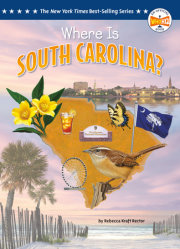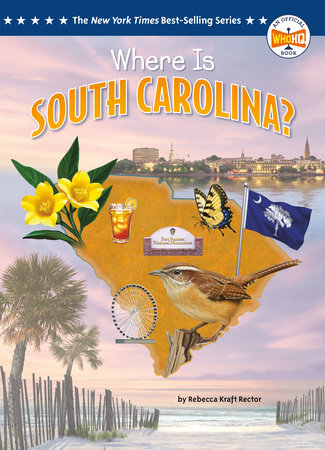

Dive into the history, geography, and culture of South Carolina in this installment of the 50 States series. From major cities to historic events, Where Is South Carolina? introduces you to the state in a whole new way, whether you’re proud to call it home or learning about a distant destination.

Visit famous landmarks like the Angel Oak tree. Meet important people like Thomas Sumter. Read about the first shots fired in the American Civil War and the first opera performance in the United States. Fans of sports, nature, and weird facts will all find something to love about the home of Hilton Head Island and the streets of Charleston. Not to mention the rich heritage of the Gullah Geechee culture!
Including timelines, black-and-white illustrations, and a fact-filled “At a Glance” section, this book has everything you need to know about the heritage, development, and present day of South Carolina.
Who HQ is your headquarters for history. The Who HQ team is always working to provide simple and clear answers to some of our biggest questions. From Who Was George Washington? to Who Is Michelle Obama?, and What Was the Battle of Gettysburg? to Where Is the Great Barrier Reef?, we strive to give you all the facts. Visit us at WhoHQ.com View titles by Who HQ
Where Is South Carolina?

During the Revolutionary War, American colonists learned that British troops planned to attack Charleston (say: CHARL-stun). It was an important port city where people and goods—including soldiers and weapons—could be shipped across the ocean. It was also the capital of South Carolina, one of the thirteen colonies that had declared independence from Britain.

The Continental Army needed a fort to protect Charleston. They hurried to build one on Sullivan’s Island, at the entrance to the harbor. The colonists cut thousands of palmetto trees to make the fort’s log walls. Palmetto trees, also called sabal palms, are common in the area. They can grow along the coast or in ponds of brackish (a mix of salt and fresh) water, so there were many of them on Sullivan’s Island. To survive windy weather and hurricanes, palmettos have flexible, bendy wood. Colonists filled the space between the log walls with sand.

They had only managed to build two walls when British ships arrived on June 28, 1776. The nine enemy ships carried almost three hundred cannons. The British bombarded the half-built fort for more than ten hours. But the palmetto walls didn’t shatter when cannon balls struck. Because they were so flexible, they absorbed the impact. British ships were damaged when the colonists returned fire. The British withdrew, giving the colonists their first major victory in the Revolutionary War. Today, South Carolina’s state flag and state seal each feature a palmetto tree.

About

Dive into the history, geography, and culture of South Carolina in this installment of the 50 States series. From major cities to historic events, Where Is South Carolina? introduces you to the state in a whole new way, whether you’re proud to call it home or learning about a distant destination.

Visit famous landmarks like the Angel Oak tree. Meet important people like Thomas Sumter. Read about the first shots fired in the American Civil War and the first opera performance in the United States. Fans of sports, nature, and weird facts will all find something to love about the home of Hilton Head Island and the streets of Charleston. Not to mention the rich heritage of the Gullah Geechee culture!

Including timelines, black-and-white illustrations, and a fact-filled “At a Glance” section, this book has everything you need to know about the heritage, development, and present day of South Carolina.

Author

Who HQ is your headquarters for history. The Who HQ team is always working to provide simple and clear answers to some of our biggest questions. From Who Was George Washington? to Who Is Michelle Obama?, and What Was the Battle of Gettysburg? to Where Is the Great Barrier Reef?, we strive to give you all the facts. Visit us at WhoHQ.com View titles by Who HQ

Excerpt

Where Is South Carolina?

During the Revolutionary War, American colonists learned that British troops planned to attack Charleston (say: CHARL-stun). It was an important port city where people and goods—including soldiers and weapons—could be shipped across the ocean. It was also the capital of South Carolina, one of the thirteen colonies that had declared independence from Britain.

The Continental Army needed a fort to protect Charleston. They hurried to build one on Sullivan’s Island, at the entrance to the harbor. The colonists cut thousands of palmetto trees to make the fort’s log walls. Palmetto trees, also called sabal palms, are common in the area. They can grow along the coast or in ponds of brackish (a mix of salt and fresh) water, so there were many of them on Sullivan’s Island. To survive windy weather and hurricanes, palmettos have flexible, bendy wood. Colonists filled the space between the log walls with sand.

They had only managed to build two walls when British ships arrived on June 28, 1776. The nine enemy ships carried almost three hundred cannons. The British bombarded the half-built fort for more than ten hours. But the palmetto walls didn’t shatter when cannon balls struck. Because they were so flexible, they absorbed the impact. British ships were damaged when the colonists returned fire. The British withdrew, giving the colonists their first major victory in the Revolutionary War. Today, South Carolina’s state flag and state seal each feature a palmetto tree.